Gyuto 牛刀
The Japanese chef knife: meat, vegetables, herbs, rocking cuts. The one that stays on the board.
- Blade
- 20 cm
- Overall
- 34.5 cm
- Weight
- 220 g
刃 Japanese-style kitchen knives
67-layer damascus steel, a 15° edge on each side, a red wood handle. From €49 to €99.
01 · The blade
The Japanese chef knife: meat, vegetables, herbs, rocking cuts. The one that stays on the board.
02 · Damascus steel
00layers
The pattern on the blade is not decoration: it is 67 layers of steel forged together, which you read along the edge like the rings of a tree.
03 · 01 The edge
A narrow angle, the one Japanese blades use. The edge goes into a tomato without crushing it and holds from one session on the stone to the next.
03 · 02 The hammering
The hammer facets leave small air pockets under the slice: potato comes away instead of sticking to the blade.
03 · 03 The damascus
The veins are neither engraved nor printed: they are the folded layers of steel, revealed by polishing. No two blades share the same one.
03 · 04 The handle
A dark red wood handle and a metal bolster that closes the joint with the blade. The same design across the whole range.
04 · The range · Gyuto 01 / 04
The Japanese chef knife: meat, vegetables, herbs, rocking cuts. The one that stays on the board.
05 · Going further
Every knife is sold on its own. The set brings the five blades together.
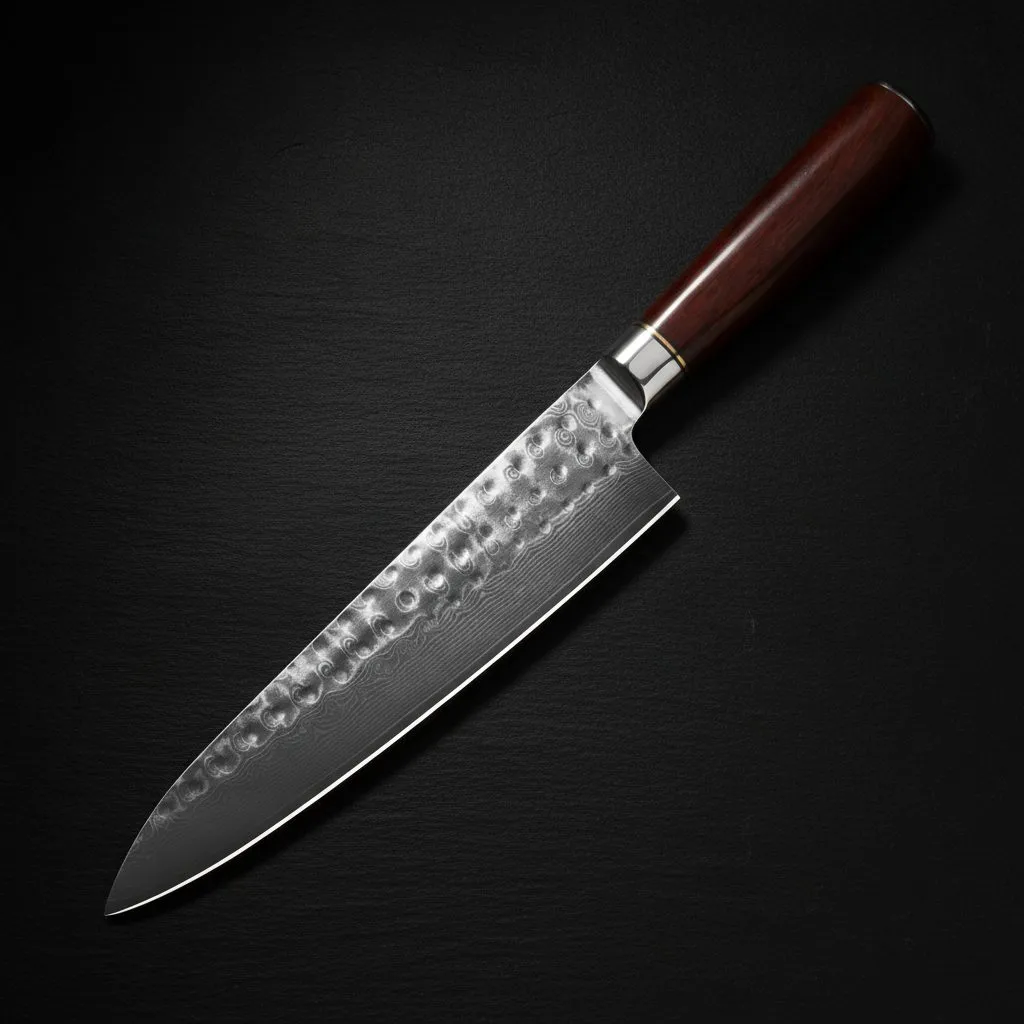
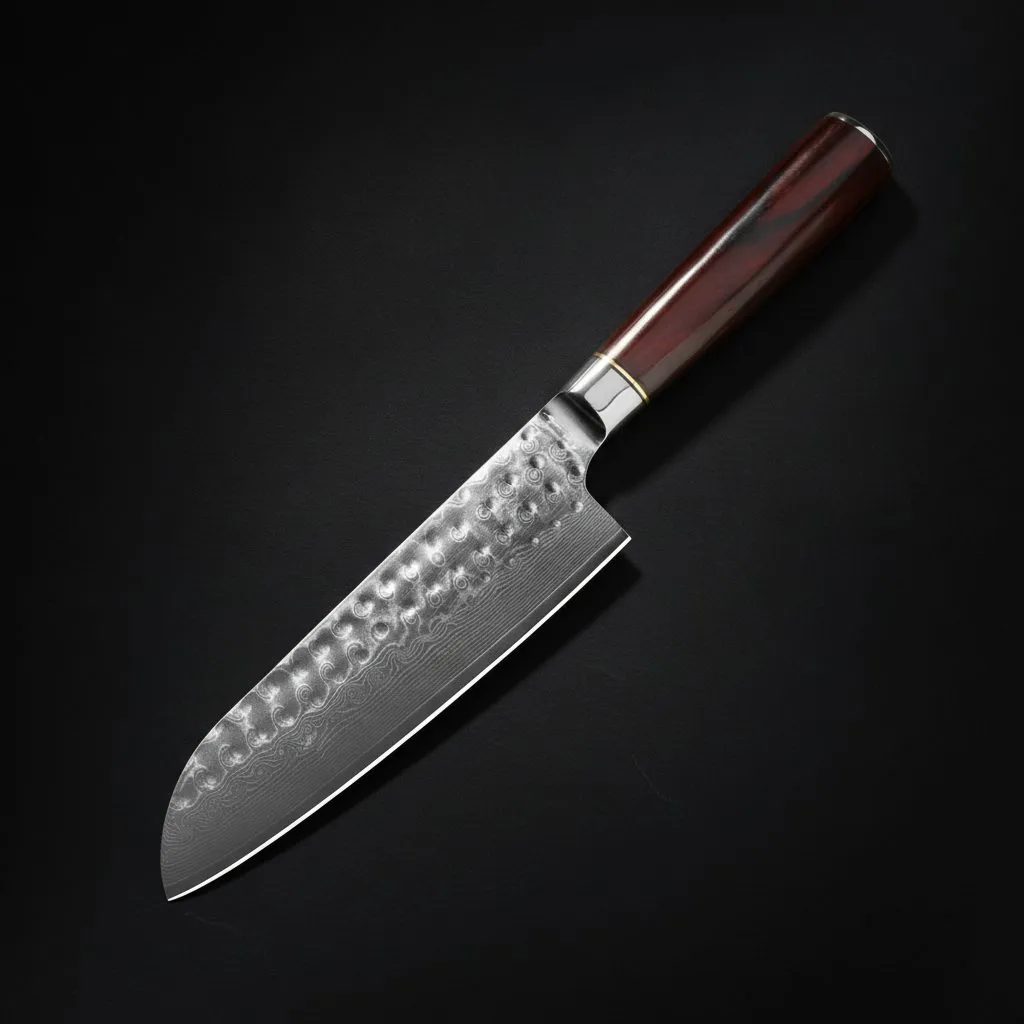
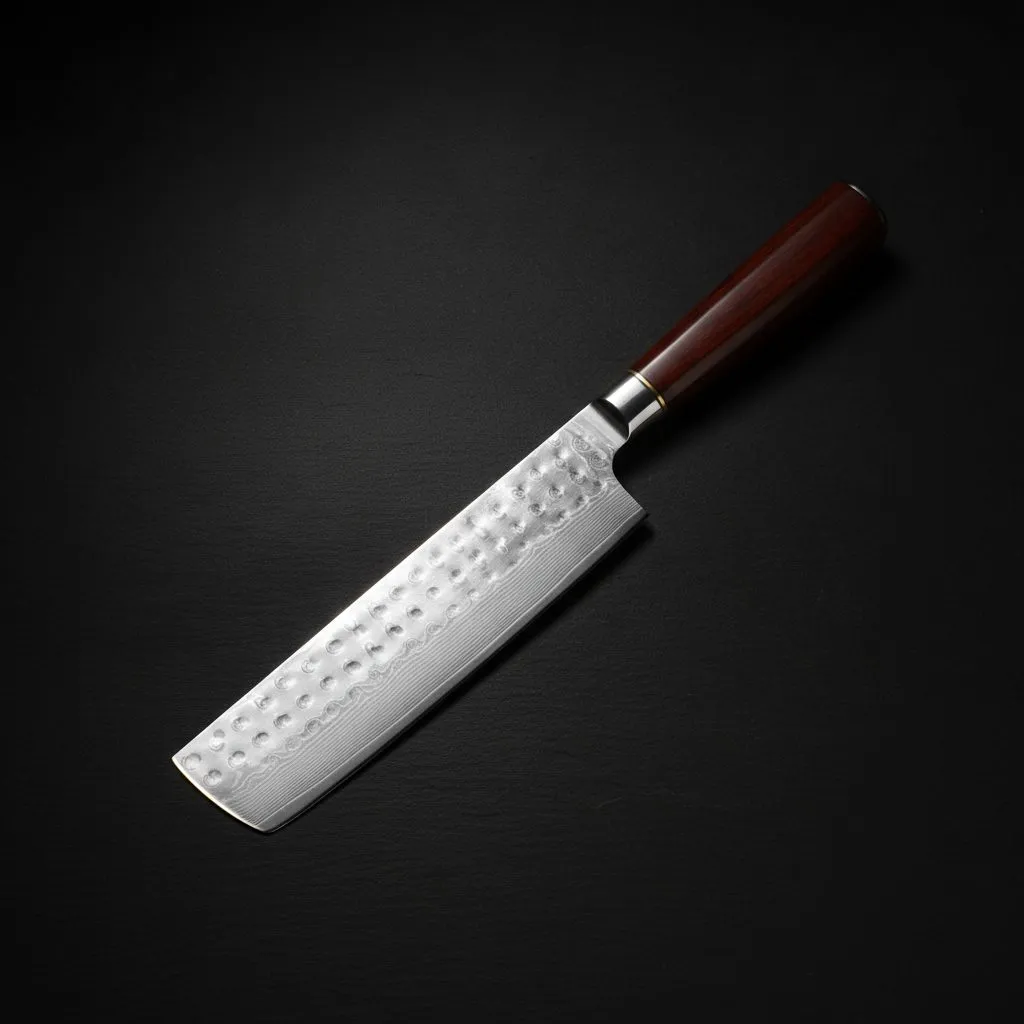
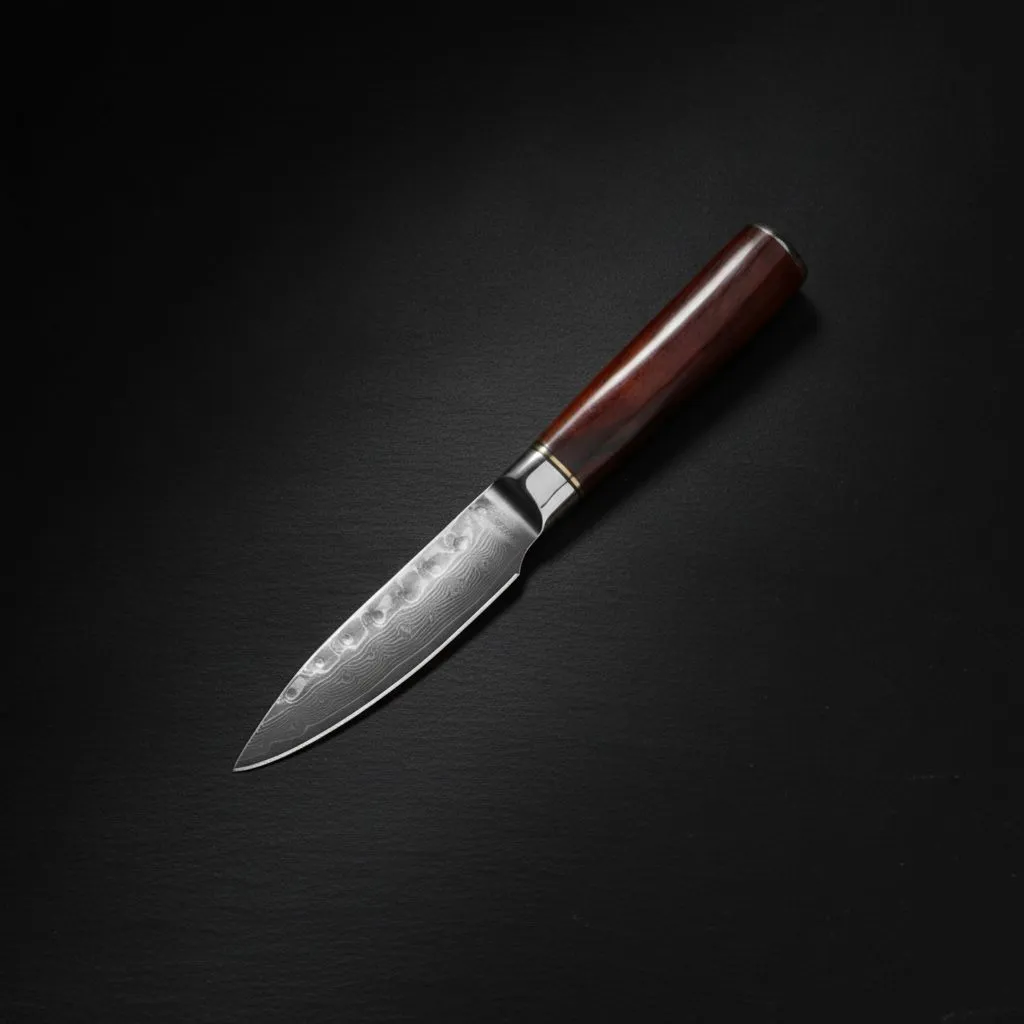
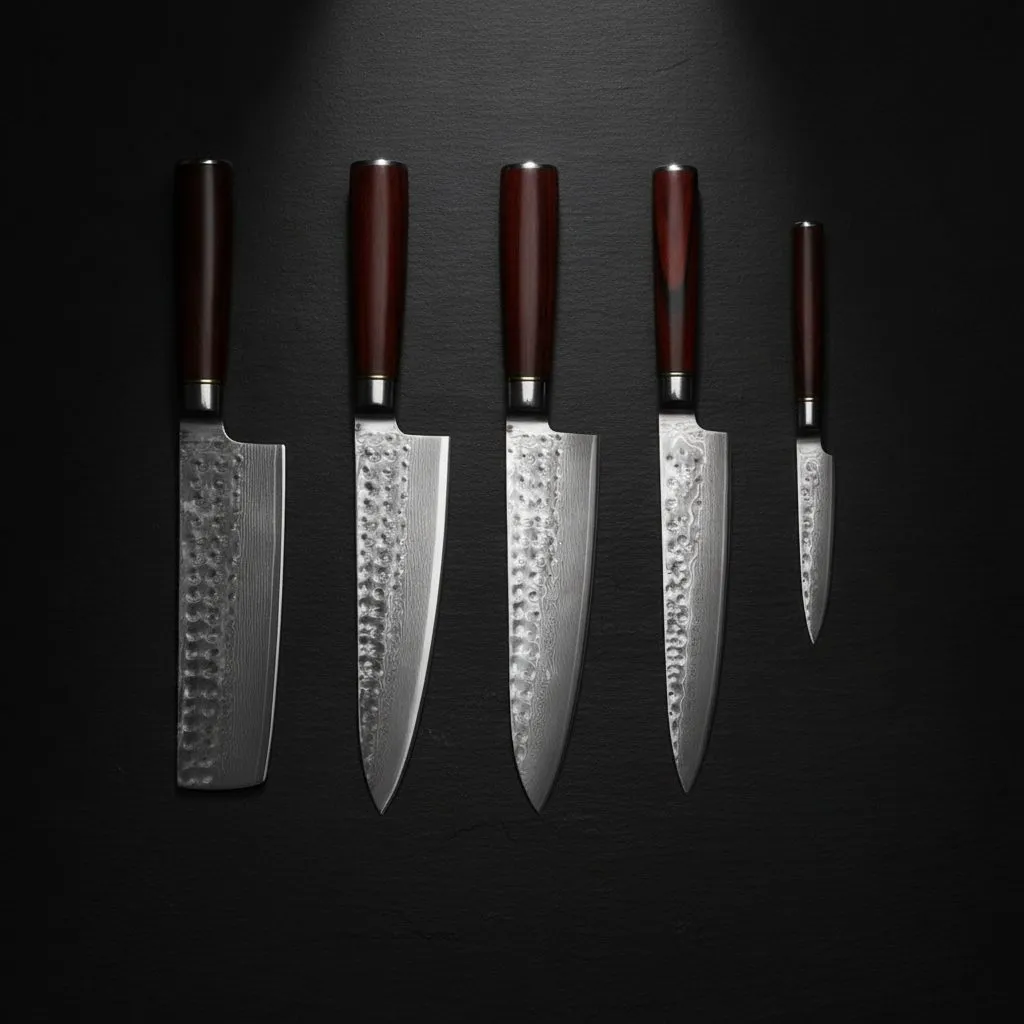
A Japanese knife is defined by three things: a steel harder than European cutlery, an edge ground finer, and a shape built for one precise movement. That is why a Japanese blade enters the skin of a tomato where an ordinary knife skates, and why it keeps that edge for months.
The six references on this page come from one series: a 67 layer forged damascus blade, hammered finish, metal bolster, dark red wooden handle. From one shape to the next only the blade changes, which gives a coherent set rather than a mismatched collection.
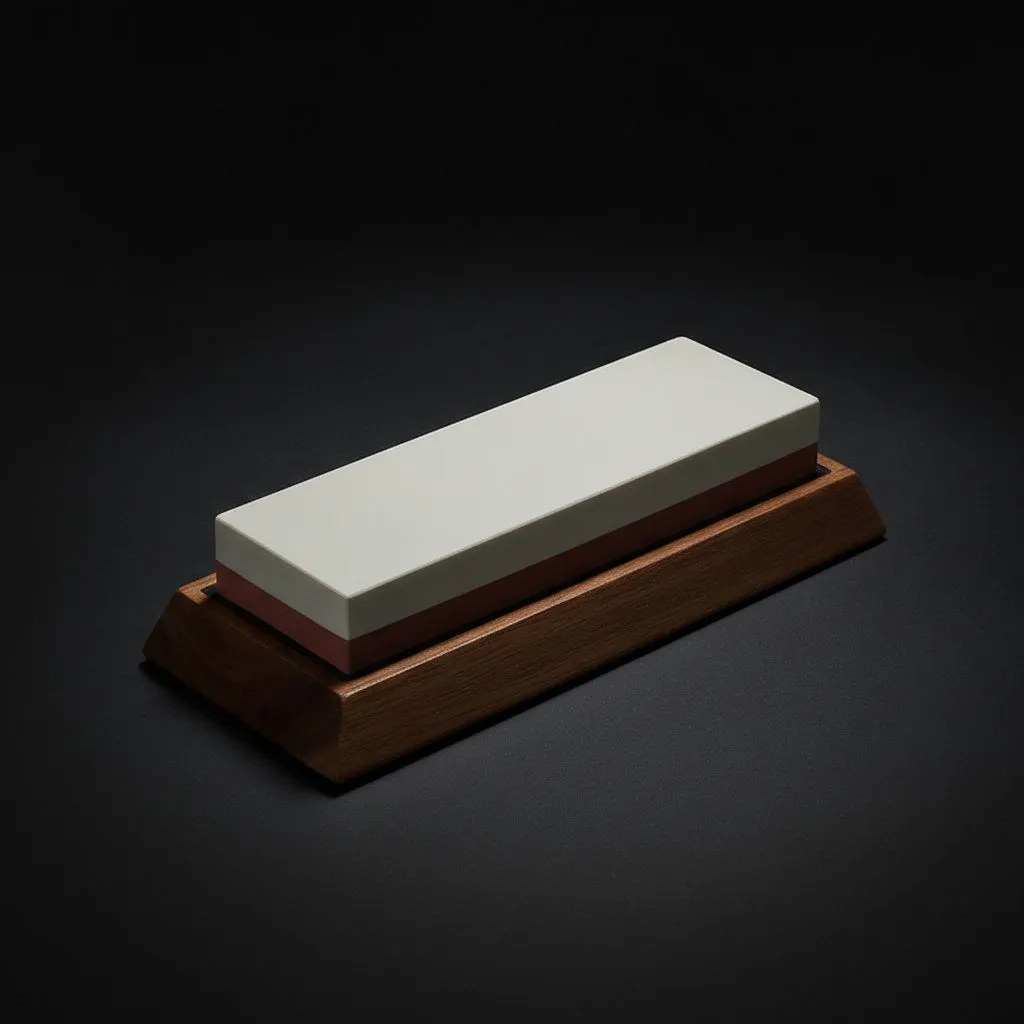
The 20 cm gyuto is the Japanese chef knife: it does eighty percent of the work in a kitchen, from onion to roast. The 18 cm santoku cuts straight down, without the rocking motion, and suits anyone working mostly vegetables and fish. The 17.5 cm nakiri, a rectangular blade with no tip, gives the most regular julienne. The 9 cm paring knife is the one you pick up twenty times a day. The 1000 / 3000 water stone maintains all four, and the five knife set brings the range together.
The blades are forged in China in the Japanese style, and we write it on every product page: nothing here should be read as Japanese manufacture. Dispatched within 2 working days, delivered in 10 to 25 days, 9.90 EUR shipping and free over 150 EUR. Returns accepted for 14 days, 30 day commercial guarantee.
06 · Care
Warm water, a drop of washing-up liquid, the soft side of the sponge. Never the dishwasher.
A tea towel, straight away. Damascus does not like drying in the open air.
Wood or plastic. No bones, no frozen food, no glass or marble.
1000 grit to restore the edge, 3000 to polish it, every now and then.
Transparency
Japanese style, forged in China.
The blades are forged in China, in the Japanese style, and we say so on every product page. What we promise is in the description: 67-layer damascus, a 15° edge on each side, nothing more.