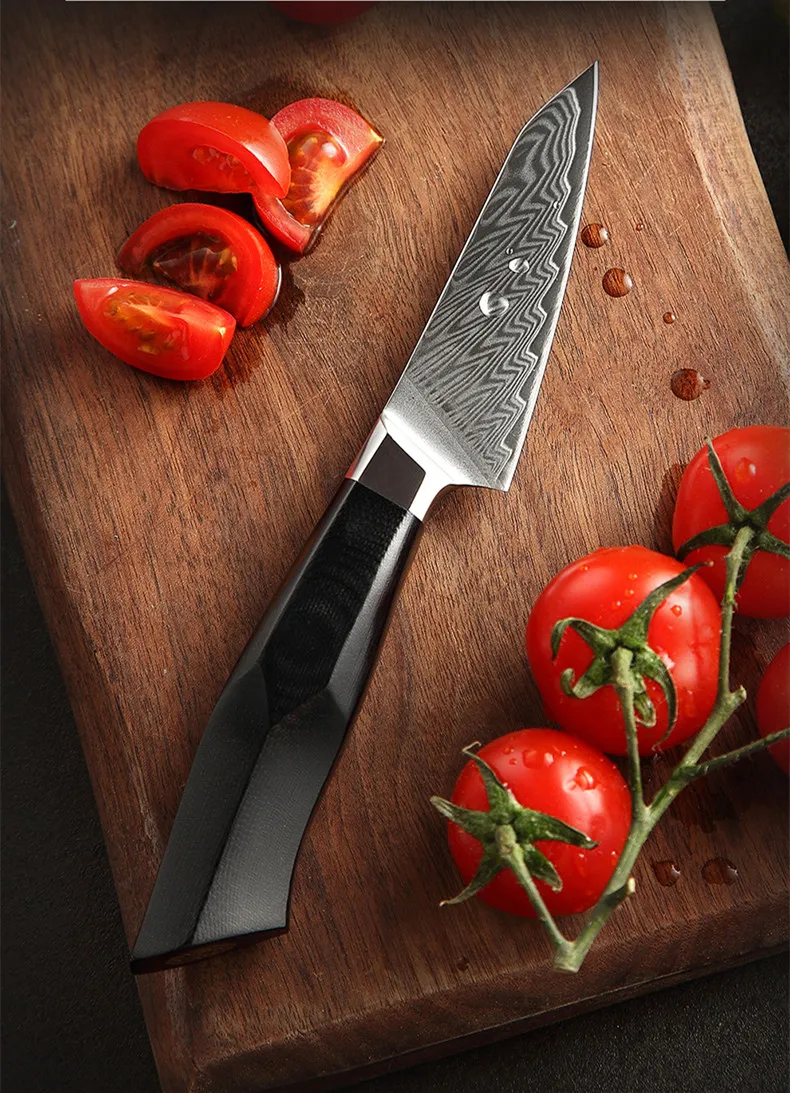
Damascus
Paring knife 9 cm
The small knife you reach for twenty times a day.
€59 Net price. VAT not applicable. Shipping calculated at checkout.
Dispatched within 2 working days, delivered in 10 to 25 days.
The knives ship from the workshop that makes them. The stated delay is the real one, not an optimistic average.
14 day returns, no reason needed. 2 year legal guarantee of conformity.
- Steel
- Damascus
- Weight
- 240 g
- Origin
- Forged in China
What it does
The paring knife is the one nobody counts. It peels, trims, cores, and slices a shallot over the pan. It barely leaves the worktop, which is why it deserves better than a three euro blade.
Its 9 cm blade is short and thin with a clean point: it enters a tomato without rolling it and follows a chicken joint without forcing.
Why VG10
The same steel as the large blades, for the same reason: the edge. On a paring knife the difference is immediate, because your hand is two centimetres from it. A blade that slides through pepper skin instead of skating on it changes how you work.
What it asks for
Nothing special, except not ending up at the bottom of a drawer against forks. A magnetic rack or a sheath, and it keeps its edge.
Specifications
| Blade length | 98 mm |
|---|---|
| Weight | 240 g |
| Steel | Damascus, alloy not stated by the maker |
| Origin | Blade forged in China, Japanese in style |
In the box
- The 9 cm paring knife, sharp
- A rigid card travel sheath
- The care card
Frequently asked
What is a paring knife for?
Everything done in the hand rather than on the board: peeling, coring a tomato, degerming garlic, trimming meat, opening a carton. It is the most used knife in a kitchen, and often the worst one.
Why a VG10 paring knife when a paring knife costs ten euros?
Because it is the one you hold longest. An edge that glides instead of catching changes the work, and hard steel keeps that edge for months.
Is 9 cm enough?
Yes. Any longer and the knife becomes awkward in the hand, which is exactly where it is used.
Are your knives made in Japan?
No. The blades are forged in China, in workshops specialised in damascus steel. The style and geometry are Japanese, the manufacturing is not.
Can it go in the dishwasher?
No. Heat and alkaline salts damage the edge and the handle. Warm water, a cloth, dry storage.
Does it arrive sharp?
Yes. It leaves the workshop sharpened to 15 degrees per side, and we check the edge before dispatch.
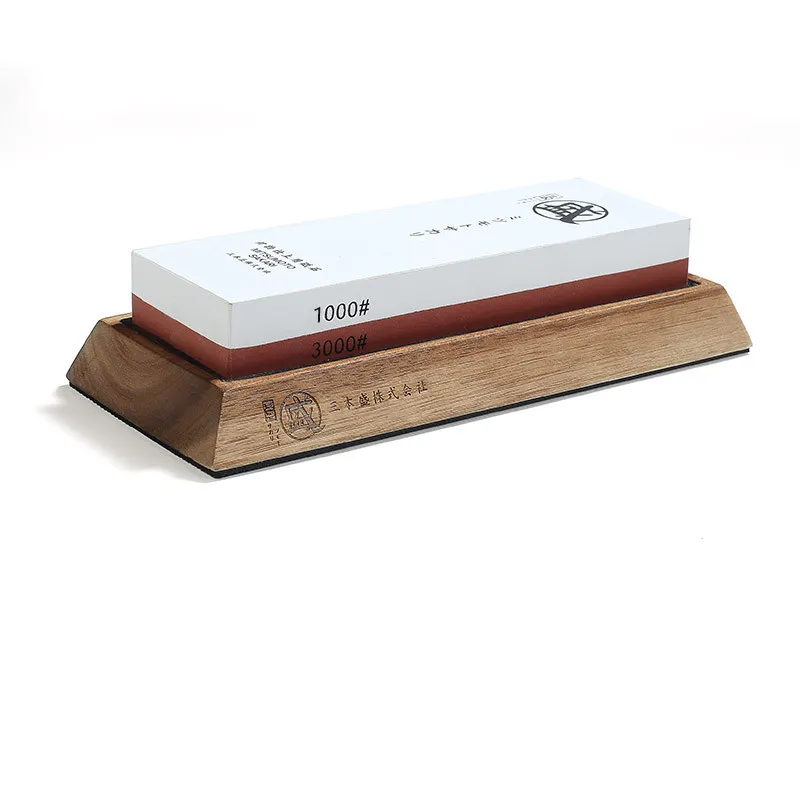
A blade needs upkeep
A 15 degree edge is restored on a stone, not on a steel. Ours is built for that angle.