The damascus collection
Japanese knives in damascus steel
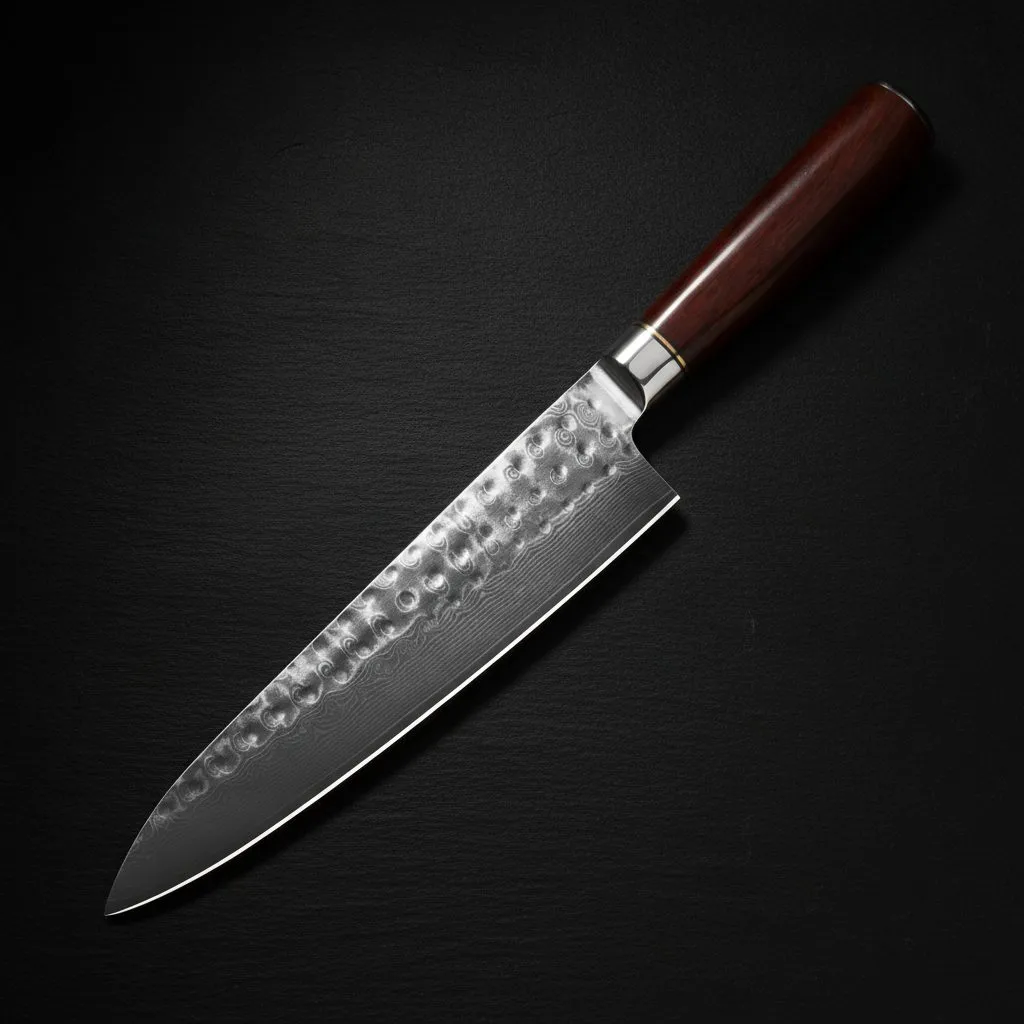
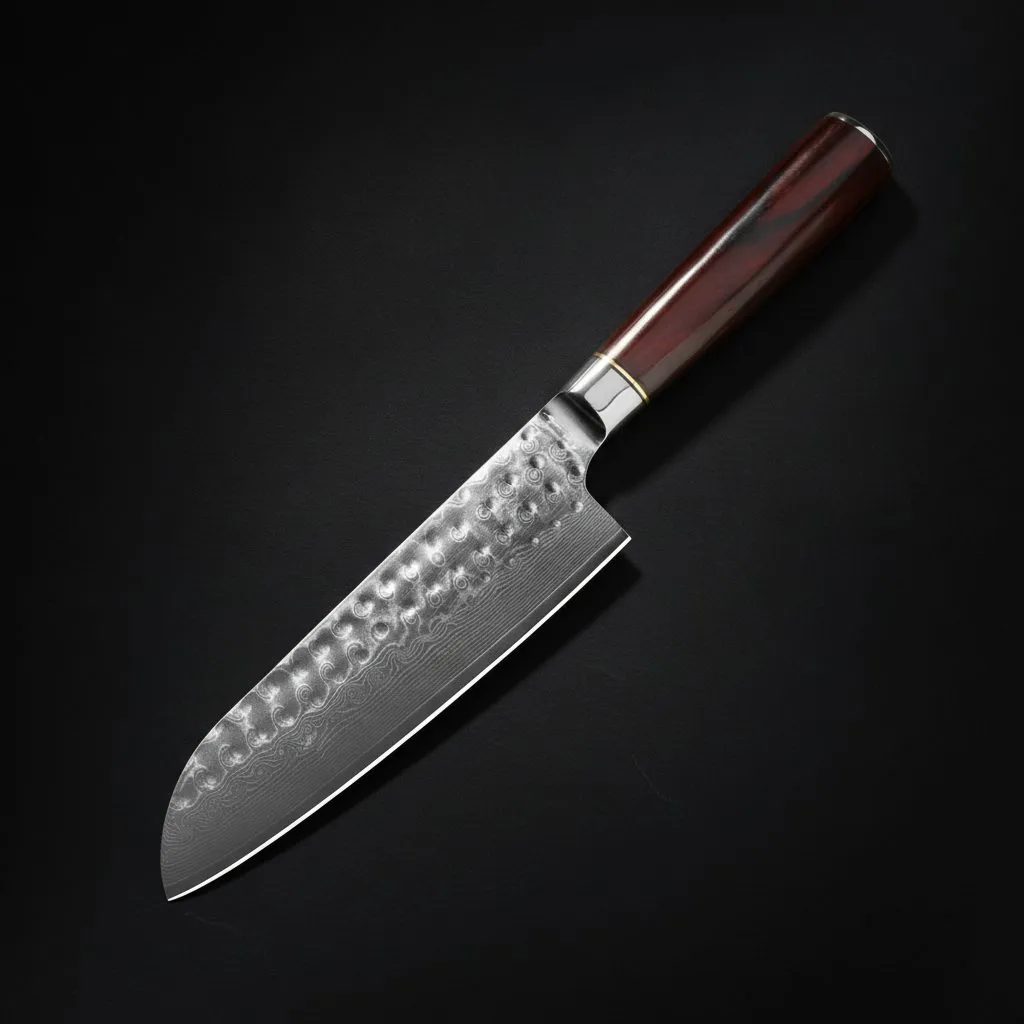
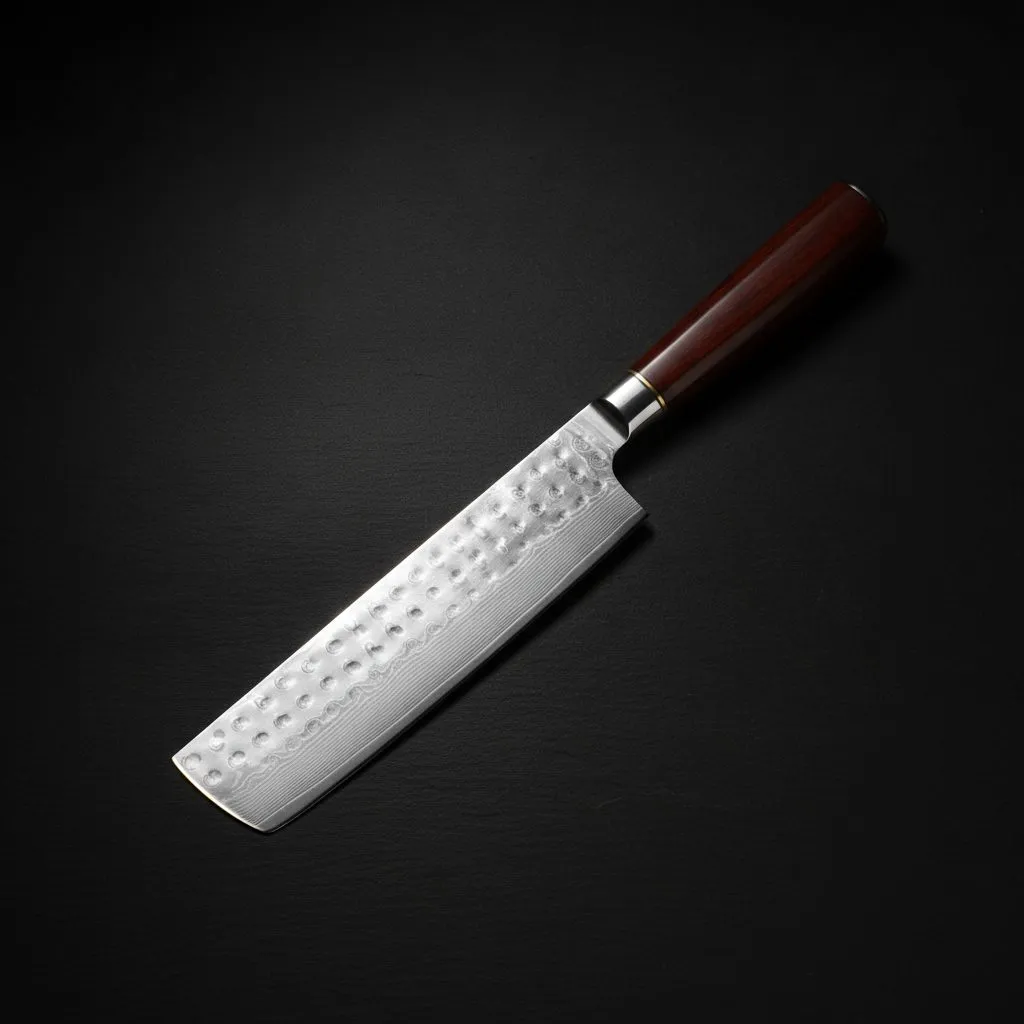
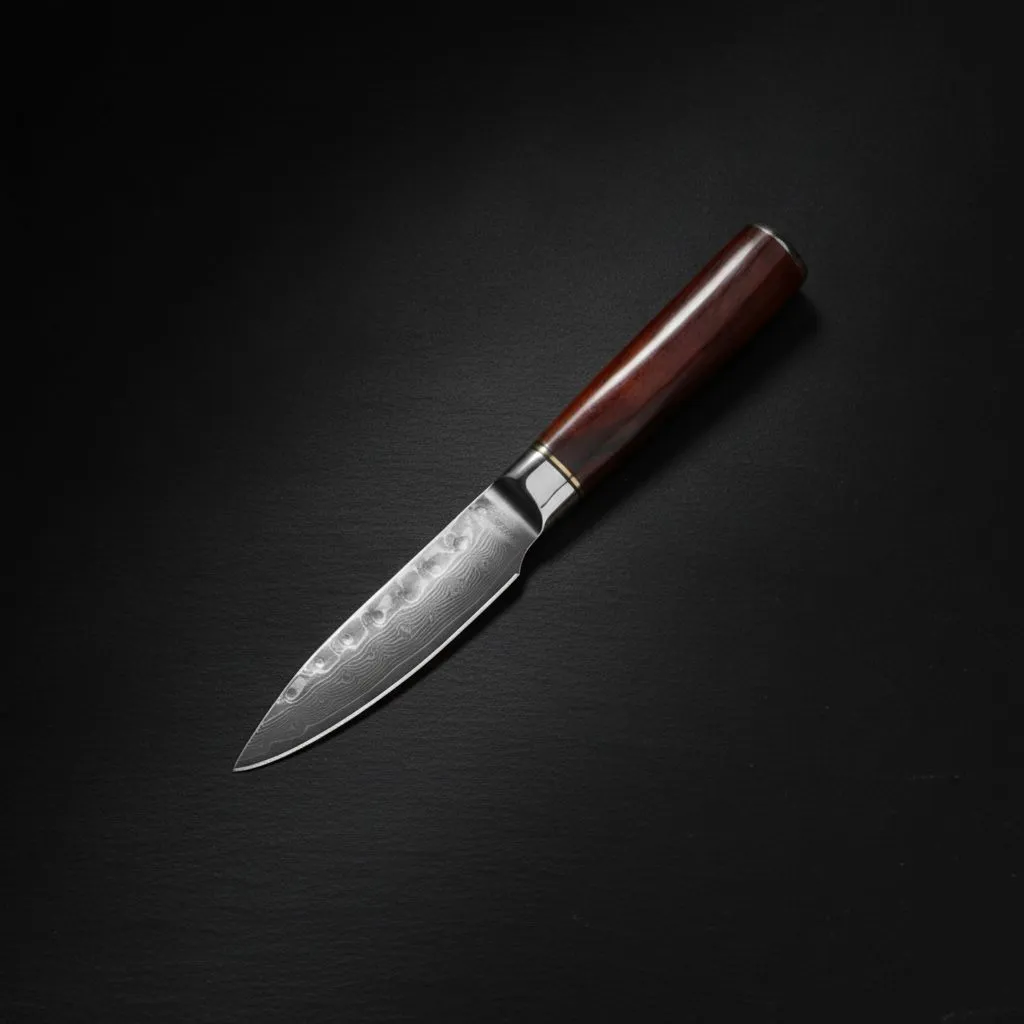
The whole Yaiba range in 67 layer forged damascus steel: gyuto, santoku, nakiri, paring knife and set, hammered and sharpened to 15 degrees per side.
A Japanese damascus knife is not made of one steel. It is an assembly: a hard core, the part that cuts, wrapped in layers of softer steel folded over themselves. Acid polishing reveals their drawing, those veins running across the flat of the blade that we call the damascus pattern.
Every blade on this page comes from the same series: forged damascus of 67 layers, a hammered finish so food releases, a metal bolster and a dark red wooden handle. From one shape to the next only the geometry changes, which gives a coherent set where damascus knives bought one at a time stay mismatched.
That is what puts these knives in the high end without the price: forged damascus, a 15 degree edge per side and a hammered finish are those of a specialist cutler, for 49 to 249 €. The blades are forged in China, in the Japanese style, and we write it on every product page.
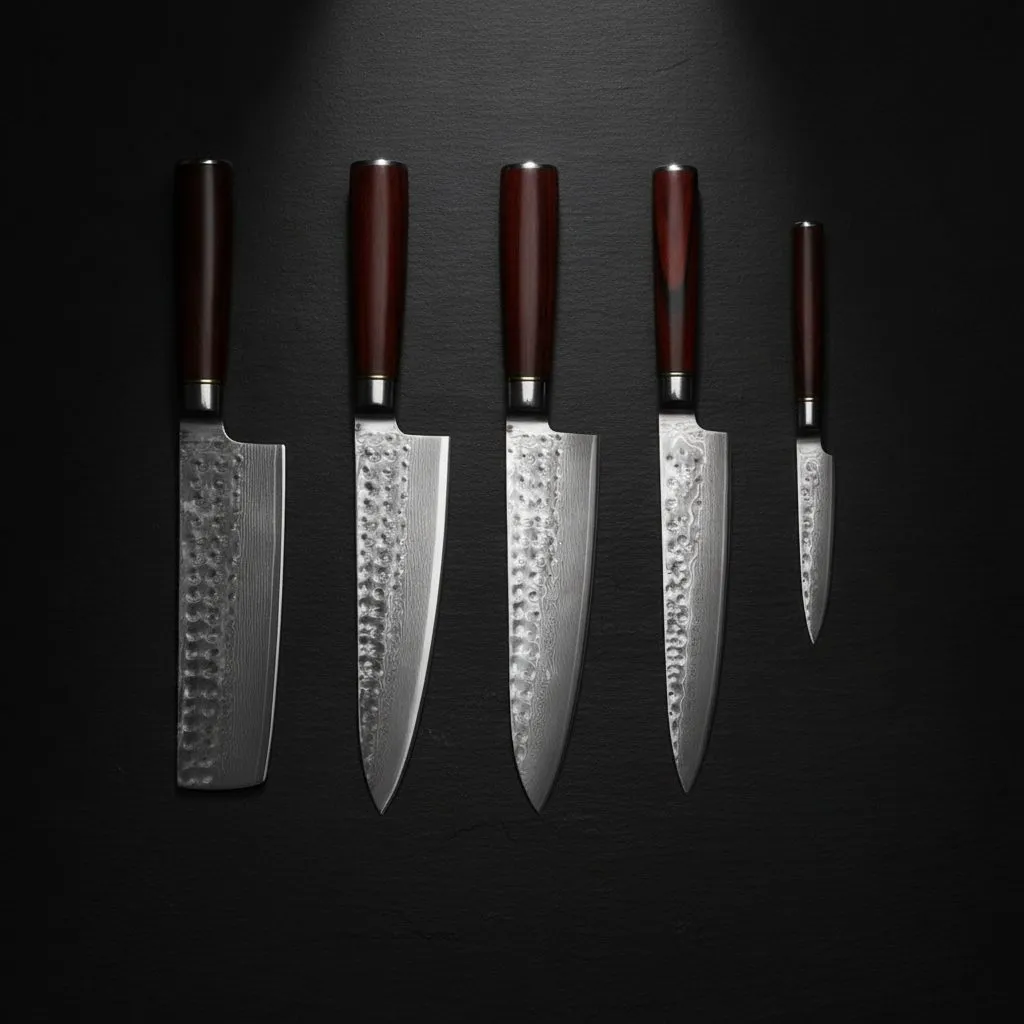
The blades compared
| Blade | Length | Job | Price |
|---|---|---|---|
| Gyuto 20 cm | 20 cm | The Japanese chef’s knife: meat, vegetables, herbs, rocking cuts. | €99 |
| Santoku 18 cm | 18 cm | Straight cutting, no rocking. Meat, fish and vegetables in quantity. | €89 |
| Nakiri 17.5 cm | 17.5 cm | Rectangular blade, no tip. Even juliennes and chiffonades. | €89 |
| Paring knife 9 cm | 9 cm | Work in the hand: peeling, trimming, coring, lifting a zest. | €49 |
| Five knife set | Five blades | The whole range in one box, to equip a kitchen at once. | €249 |
What damascus asks for
Hard steel holds its edge for months, then it has to be redone. A 15 degree edge is reset on a water stone, never in a pull-through sharpener that would impose its own 20 degrees. No dishwasher, no bone, no glass board: the rest is ordinary use.
Japanese whetstone 1000 / 3000 — The Japanese water stone that suits a 15 degree edge.
A 15 degree edge is restored on a stone, not on a steel. Ours is built for that angle.
See the knifeBefore you choose
The guides that answer the questions you ask yourself in front of a damascus blade, then about sharpening and care.
The best Japanese knife
There is no single best Japanese knife, only the one that matches your movement: the four criteria that matter, the shapes, the steels and the prices.
Gyuto, santoku or nakiri
Gyuto, santoku or nakiri: Japanese shapes compared on the movement, what is being cut and room on the board, plus what kiritsuke, bunka and deba are worth.
VG10 steel and 67 layers
What VG10 steel really is, what the 67 damascus layers are for, and how to tell a technical argument from a sales argument when choosing a knife.
What kills a Japanese blade
The six things that ruin a Japanese knife, and the ones that make it last ten years. Washing, storage, board, sharpening, stains.
Sharpening a knife on a whetstone
The complete method for sharpening a kitchen knife on a water stone: soaking, angle, burr, finish. Written for a first attempt.
What angle for a Japanese knife
Why Japanese knives are sharpened at 15 degrees per side when European knives sit at 20, what that changes, and what destroys the angle.
The knife and the dishwasher
What actually happens to a knife blade inside a dishwasher: heat, alkaline detergents, knocks, handle. And the one case where it does no harm.
Questions about damascus
Is the damascus forged or etched?
Both exist. Forged damascus is a real stack of layers, forge welded then folded: the pattern runs through the thickness of the blade. Fake damascus is a pattern etched with acid or lasered onto ordinary steel, and it fades as you sharpen. The maker of our blades documents forged damascus of 67 layers.
Which steel is at the core?
That is the only question that matters for the edge, since the outer layers never meet it. VG10, common on this kind of blade, is hardened to around 60-61 HRC. Our maker does not name the grade of its core: we do not invent it, and the line stays empty on our product pages.
Do 67 layers make the knife sharper?
No. Sharpness comes from the core and from the grind. The layers bring structural give around a hard, therefore brittle, core, and a visible pattern. Past a dozen layers the gain is aesthetic.
Does the pattern fade over time?
On forged damascus, no: it is in the material. It dulls if the blade stays wet or goes through the dishwasher. A dry cloth after use is enough to keep it crisp.
Does a damascus knife rust?
Stainless steels of this kind resist corrosion in normal use, thanks to their chromium. Prolonged contact with salt water or acidic food can stain them: rinse and wipe the blade after cutting.
Which one should I start with?
The 20 cm gyuto if you buy a single blade: it is the only shape that does every job properly, meat included. The set if you are equipping a whole kitchen, since it costs less than the five knives bought separately.